Many mission-driven startups begin with a powerful intention: solve a real problem, improve lives, and build a company that matters. But as these ventures grow, a common challenge appears. The mission is inspiring, yet the path from action to measurable impact becomes unclear.
This is where a structured framework becomes essential. Mission-driven companies must be able to answer a simple but powerful question: how do our daily activities create impact?
The Mission Map helps answer that question.
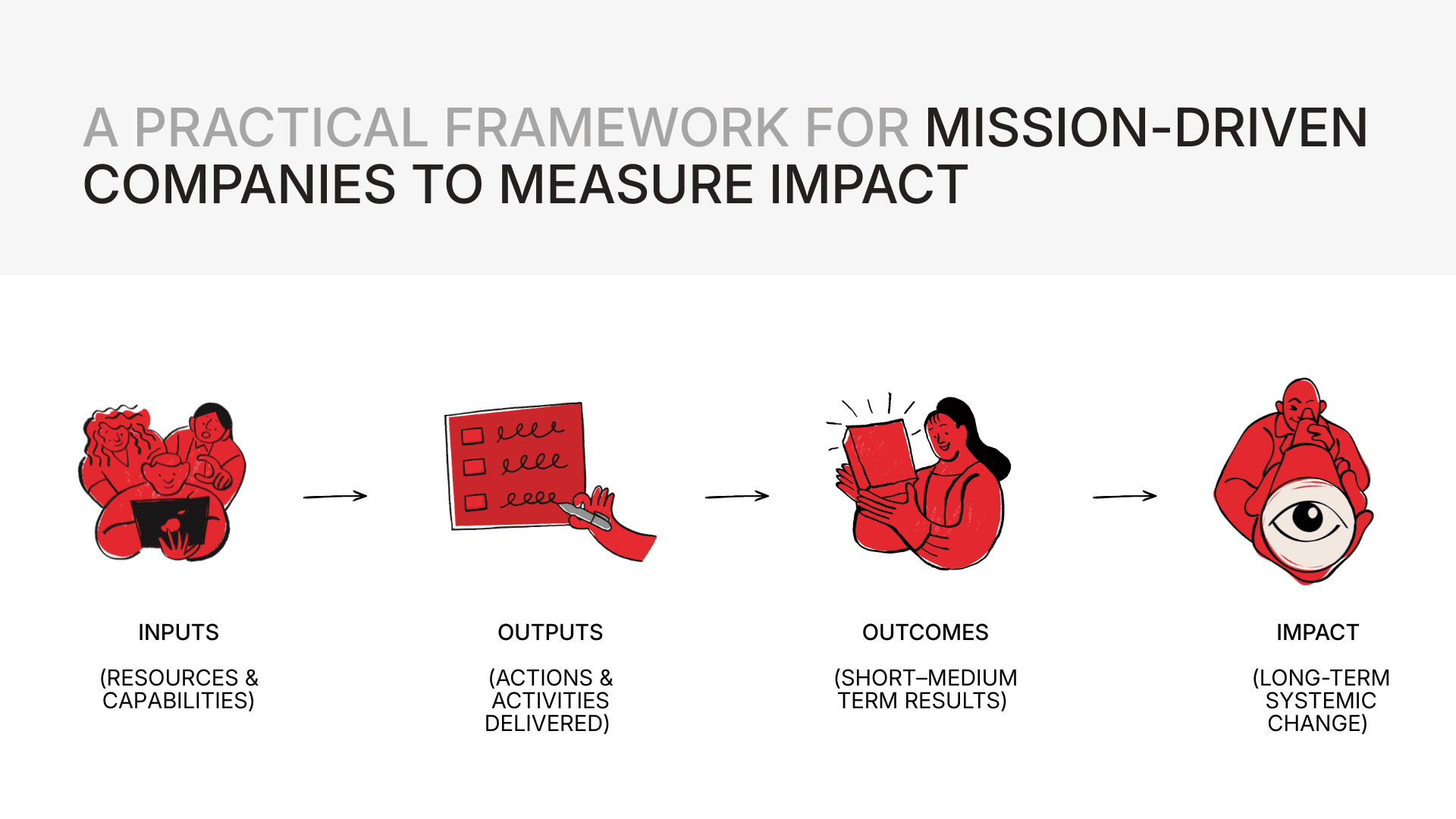
The Mission Map is a strategic framework used to connect a company’s resources, actions, and results to the long-term change it aims to create. It organizes a mission-driven venture into four interconnected components: Inputs, Outputs, Outcomes, and Impact.
When mapped clearly, founders, investors, employees, and communities can all see how a mission turns into measurable results.
1. Inputs: The Foundation of the Mission
Inputs are the resources that power a mission-driven company. These include financial capital, technology, talent, partnerships, knowledge, and infrastructure.
Every mission-driven startup begins here. Without the right inputs, even the strongest ideas cannot translate into action.
Inputs represent what a company invests in order to pursue its mission.
For mission-driven organizations, understanding inputs is crucial because it clarifies where resources are coming from and whether they are sufficient to achieve the desired scale of impact.
At GMI, this stage often involves helping founders identify the right partnerships, mentorship, and systems that strengthen the foundation of their mission.
2. Outputs: What the Company Actually Delivers
Outputs represent the activities and products a company delivers using its inputs.
This could include services provided, products sold, training programs conducted, software platforms launched, or community initiatives implemented.
Outputs are measurable actions. They answer the question: what did the company actually do?
However, outputs alone do not prove impact. They only show activity.
A startup may run thousands of training sessions or distribute thousands of products, but without deeper analysis, it is impossible to know whether these actions truly improved lives or systems.
That is why the next stage matters.
3. Outcomes: The Measurable Change
Outcomes represent the short to medium-term results that occur because of a company’s outputs.
If outputs are activities, outcomes are the changes those activities create.
Outcomes demonstrate that a product or service is working in practice. They show improvement in behavior, capability, or access.
For mission-driven startups, outcomes are where evidence begins to appear. Data, feedback, and real-world results start validating whether the mission is being achieved.
Investors and impact partners increasingly expect startups to measure outcomes because they indicate whether a venture is truly delivering value beyond revenue.
4. Impact: The Long-Term Transformation
Impact represents the long-term systemic change that occurs when outcomes accumulate and scale over time.
Impact is broader than individual results. It reflects transformation at a societal, environmental, or economic level.
Impact answers the most important mission-driven question: what changed in the world because this company exists?
This stage often takes years to fully realize, but it is the north star that guides strategy and decision-making.
Why the Mission Map Matters
Mission-driven companies often struggle with measurement. Many know what they want to achieve, but they lack a structured method to track progress from effort to impact.
The Mission Map solves this by creating a clear chain between resources, actions, results, and long-term impact.
It benefits founders in several ways.
First, it clarifies strategy. When founders map inputs, outputs, outcomes, and impact, they can see whether their activities actually align with their mission.
Second, it strengthens credibility. Investors, partners, and communities increasingly want evidence of impact. A clear mission map helps demonstrate how the company creates real value.
Third, it improves decision-making. If outputs are high but outcomes are weak, the strategy may need adjustment. If outcomes are strong, scaling efforts becomes easier to justify.
Finally, it aligns teams. When employees understand how their work contributes to outcomes and impact, motivation and purpose increase.
How GMI Uses the Mission Map
At GMI, we believe that purpose must be measurable to become scalable.
Many mission-driven founders start with powerful ideas but lack the structure to translate those ideas into lasting impact. The Mission Map provides a practical architecture for doing exactly that.
Through mentorship, strategic frameworks, and collaboration, GMI helps companies design systems where business growth and mission progress reinforce each other.
A company’s inputs power its actions.
Those actions produce measurable outcomes.
And over time, those outcomes create meaningful impact.
When this chain is clearly defined, mission-driven businesses move beyond intention. They begin building evidence.
SHARE